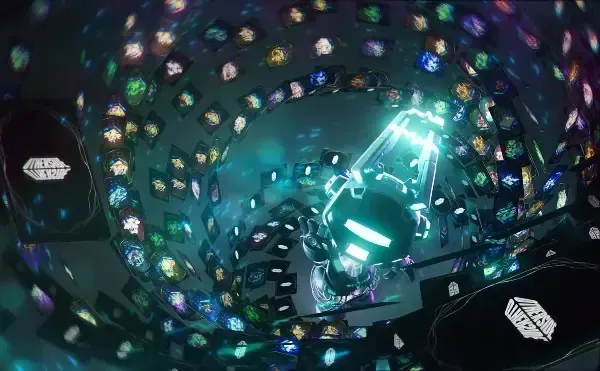
Digital art is no longer at the margins of the art market
The global art market is changing. Digital technologies are influencing not only how art is created, but also how it is discovered, presented, purchased and collected.
The Art Basel & UBS Survey of Global Collecting 2026, conducted by Arts Economics and authored by Dr. Clare McAndrew, provides insights into these developments. It was published on 8 October 2026.
Based on responses from 3,100 high-net-worth collectors across ten international markets, the study examines collecting habits, spending patterns and the growing influence of digital technologies.
One particularly interesting finding: digital art accounted for 9% of total fine-art expenditure. The result points to digital art as a significant category within contemporary art collecting.
For digital artists, creative studios, galleries and businesses working with digital art, this raises an important question: how can the sector turn its established market presence into sustainable growth?
1. Digital art has established its place in contemporary collecting
Paintings continue to dominate the market, accounting for 31% of fine-art expenditure, followed by sculpture at 15% and works on paper at 10%.
Digital art accounts for 9%, placing it alongside other significant collecting categories.
Share of fine-art expenditure of the surveyed high-net-worth collectors by medium: paintings 31%, sculpture 15%, works on paper 10%, digital art 9%. Shown here because it puts the headline figure in proportion: digital art sits just behind works on paper and well behind painting. Only the four media named in the published summaries are shown. Chart: Validvent, data from the Art Basel & UBS Survey of Global Collecting 2026.
The survey also reports that digital art features among the first purchases of many collectors: 15% named it among their first three purchases, level with works on paper and behind painting (43%), sculpture (25%) and photography (17%). This suggests that digital art can be an entry point into collecting as well as a category for experienced buyers.
Recognition alone, however, does not guarantee sustained demand. Building collector confidence, creating compelling artistic experiences and developing professional presentation formats remain essential.
2. AI is changing how collectors discover art
One of the most notable findings concerns artificial intelligence and digital discovery.
According to the survey:
58% of collectors used digital resources for advice and recommendations.
22% used apps or AI tools, compared with 4% in 2024.
67% saw a positive impact of AI on the discoverability of artists and artworks.
66% saw a positive impact of AI on personalised advice and recommendations.
65% saw a positive impact of AI on provenance and authenticity verification.
How the surveyed collectors use digital resources and how they judge AI: use of digital resources (58%), use of apps or AI tools (22%, after 4% in 2024) and the shares who see a positive impact of AI on discoverability, personalised advice and provenance checks. Shown here because it separates two things that are easily mixed up: actual use of AI tools is still a minority habit, while expectations of AI are already held by two thirds. Chart: Validvent, data from the Art Basel & UBS Survey of Global Collecting 2026.
These developments are particularly relevant to digital art.
AI is changing the relationship between artists, audiences and collectors. New technologies enable more personalised discovery, alternative forms of visual exploration and increasingly sophisticated ways of presenting artworks.
For digital artists, visibility is becoming closely connected to the quality of their digital presence and the ways in which their work can be discovered.
At the same time, the distinction between AI as a creative tool and AI as a discovery or authentication technology remains important.
3. A new generation of collectors is shaping the future
The survey identifies Gen Z as an increasingly influential generation in the art market.
Among the high-net-worth collectors surveyed, Gen Z reported the highest average fine-art expenditure: $347,460 in 2025, against an overall average of $124,265. Younger collectors were also more open to discovering unfamiliar artists: 56% of Gen Z respondents bought work by an artist new to them, compared with 36% of boomers.
For digital art, this presents an interesting opportunity.
Generations that have grown up with digital media, online communities, gaming, virtual environments and social platforms may approach artistic experiences differently from traditional collectors. They are familiar with digital environments and often discover artists through online channels.
Nevertheless, younger collectors continue to value traditional artistic categories such as painting and sculpture. The future of collecting is therefore unlikely to be a simple transition from physical to digital art. Instead, it will involve an increasingly diverse relationship between physical and digital artistic experiences.
4. Direct relationships between artists and collectors are growing
Another important development is the increasing relevance of direct artist-to-collector relationships.
The survey reports that 69% of collectors purchased directly from artists, up six points on the previous year and more than double the level of 2024. The direct routes included artists' studios (48%), commissioned works (40%) and works bought via Instagram (38%).
Share of surveyed collectors who bought directly from artists (69%) and the direct routes named in the survey: studios (48%), commissions (40%) and Instagram (38%). Shown here because it makes clear how close a social media channel has come to the classic studio visit as a way to buy. The three routes can overlap. Chart: Validvent, data from the Art Basel & UBS Survey of Global Collecting 2026.
This reflects a broader transformation in the art market: digital platforms are becoming essential spaces for discovering artists, developing audiences and initiating commercial relationships.
For digital artists, a professional online presence is therefore more than a marketing tool. It can become an integral part of their artistic and commercial practice.
Visibility alone is not enough. Successful digital art projects also require thoughtful presentation, reliable distribution, clear ownership information and a compelling artistic concept.
5. Beyond the screen: new opportunities for digital art experiences
The findings suggest that the future of digital art should not be understood exclusively in terms of online images or digital files.
Digital art can take many forms:
Generative and algorithmic artworks
AI-assisted artistic creations
Immersive installations and interactive environments
Digital video and moving-image art
Virtual and spatial experiences
Digital installations in museums, galleries and commercial spaces
Art-driven experiences for brands, architecture and public environments
Nouns 1 to 8, from the first days of the project in August 2021. Each Noun is generated from random traits and drawn by the smart contract itself, and a new one has been auctioned every 24 hours since launch. Shown here as an example of what the survey category "digital art" covers in practice: a generative work that exists only on the blockchain, with no physical original and no separate image file. Image: rendered by Validvent from the on-chain data of the Nouns contract; the Nouns artwork is released under CC0.
These formats create opportunities to bring digital art into physical spaces and connect technology with architecture, culture, design and communication.
For galleries, institutions and businesses, digital art can become a powerful way to create distinctive experiences and engage audiences in new ways. For artists, it opens up possibilities beyond conventional exhibition and sales models.
6. What does this mean for artists, brands and businesses?
The Art Basel & UBS findings point towards several strategic considerations.
For artists: Building a recognisable digital identity and developing a professional online presence are increasingly important. Artistic quality remains fundamental, but discoverability and presentation matter too.
For galleries and collectors: Digital art requires clear approaches to authenticity, provenance, editions, ownership and long-term preservation.
For brands and businesses: Digital art offers opportunities to create distinctive visual identities, immersive environments and innovative cultural experiences.
For institutions and cultural organisations: The combination of digital creativity, AI and interactive technologies creates new possibilities for exhibitions, installations and audience engagement.
The opportunity lies in combining artistic vision with the right technology and a clear understanding of the intended audience.
Conclusion: Digital art needs more than technology, it needs artistic vision
The Art Basel & UBS Survey of Global Collecting 2026 confirms that digital art has secured a meaningful position within contemporary art collecting.
At the same time, the findings reveal a more complex picture. Digital art's expenditure share and the wider adoption of digital discovery tools need to be understood separately: the former measures spending on an art category, while the latter describes how collectors use technology to research and discover art.
The next phase of digital art will not be defined by technology alone. It will be shaped by artists who develop original visual languages, organisations that create meaningful digital experiences, and platforms that connect artistic innovation with audiences and collectors.
Our conclusion: The future of digital art lies in bringing together creativity, technology and cultural relevance. The greatest opportunities will emerge where artistic excellence meets innovative applications and professional execution.
Discover, collect and navigate digital art with Validvent
At Validvent, we believe that digital art deserves the same thoughtful approach as any other form of contemporary art. Understanding the artists, recognising cultural relevance and navigating the technical aspects of digital ownership are all part of building a meaningful collection.
Digital art advisory: Identifying relevant artists and artworks through research, curation and market understanding.
Collection strategy: Building a coherent digital-art portfolio based on individual interests and collecting objectives.
Artist advisory: Supporting digital artists with positioning, pricing, release strategies and collector relationships.
Technical support: Facilitating purchases, wallet setup and the transfer of digital ownership.
Interested in discovering digital artworks?
Visit the Validvent Digital Art Gallery to explore available works across categories such as generative art, NFT classics, glitch and internet culture, digital photography and pioneering digital artists.
We also make collecting accessible without requiring buyers to manage cryptocurrency transactions themselves. With Collect without Crypto, purchases can be handled in euros or US dollars, with Validvent supporting the technical process.
Our perspective: Digital art is not simply another investment category or technological trend. It is an evolving cultural field that deserves informed collecting, artistic curiosity and a long-term perspective.
The survey covers high-net-worth collectors and is not a measurement of the entire digital art market. This article is editorial commentary and not investment advice.
Sotheby's and Christie's took in $1.93 billion in four evenings in New York, led by a $190.4 million Van Gogh. What the week reveals about how the art market creates value, and what digital art still has to build.
Wir möchten mit Google Analytics verstehen, welche Seiten gelesen werden. Dafür setzt Google Cookies und verarbeitet Nutzungsdaten, auch in den USA. Ohne Ihre Zustimmung wird nichts davon geladen, und Sie können Ihre Wahl jederzeit unter „Cookie-Einstellungen“ in der Fußzeile ändern. Details in unserer Datenschutzerklärung.